Do not buy a non-refundable ticket for international pet travel until four separate checks agree: destination entry, departure paperwork, every operating airline, and transit or return rules. Build the dates backward from arrival. A real certificate can still be rejected if it is the wrong form or was signed outside the destination’s time window.
There is no universal pet passport, health certificate, or airline approval. The answer changes with the animal, route, date, purpose of travel, and who actually operates each flight. This checklist helps you assemble those answers; it does not approve the animal for travel.
Start with one written itinerary
Write the trip before comparing rules. Include the outbound and return dates, every connection, and the operating carrier shown for each flight segment. Then add the details that identify the animal and the proposed travel method.
- Species, breed or type, age, and travel purpose
- Microchip number and the date it was implanted or first read
- Vaccination, test, treatment, and certificate history
- Animal weight, carrier weight, and external carrier dimensions
- Cabin, checked, manifest cargo, or a separate pet-transport plan
A rule for a dog may not cover a cat, bird, rabbit, or other animal. A non-commercial trip with an owner can also be treated differently from a sale, adoption, rescue movement, or unaccompanied shipment.
Four approvals have to line up
- Destination entry: identify the government authority and its current requirements for this animal, origin, and arrival date.
- Departure documents: confirm which veterinarian may issue the paperwork and whether a government endorsement is required.
- Every operating airline: reserve pet space and check the accepted travel method, aircraft or route limits, carrier size, and handoff point.
- Transit and return: check connection-country rules and the requirements for bringing the animal home, not only the outbound destination.
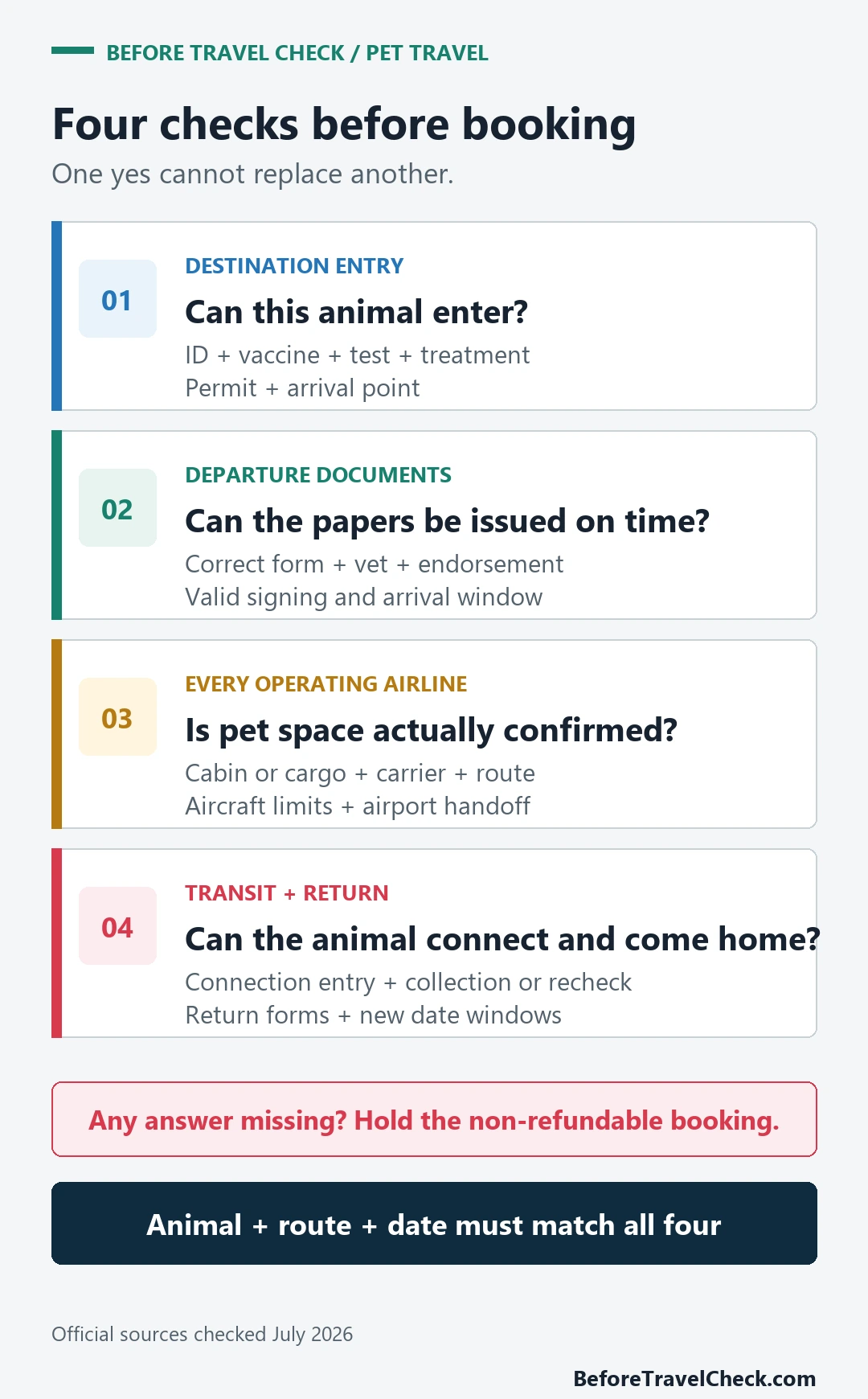
One approval cannot replace another. An airline may accept a carrier while the destination rejects the paperwork, or the government documents may be valid while the airline has no pet space on the flight.
If you are leaving the United States, use the APHIS country selector
For a pet departing the United States, the USDA APHIS export page says the destination country sets the entry requirements and that travelers must verify them for every trip. It also advises contacting a USDA-accredited veterinarian as soon as you decide to travel.
Use the destination selector on that page for the current country instructions. If the country is not listed, follow APHIS’s unknown-requirements route instead of borrowing a form from another country. APHIS is the U.S. departure authority in this example; travelers leaving another country need that country’s animal-health or export authority.
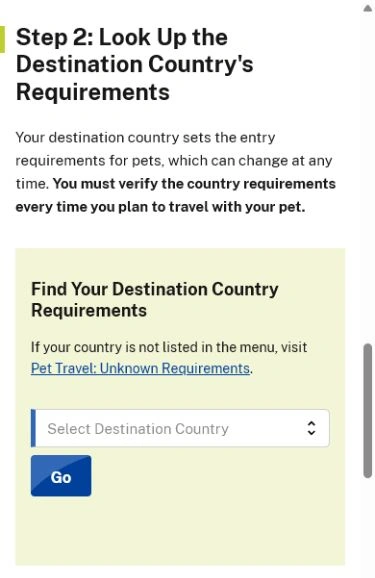
The APHIS pet-travel FAQ is explicit that one health certificate does not work for every country. It also explains that some certificates require APHIS endorsement after an accredited veterinarian issues them.
Build the document clock backward from arrival
- Find the destination’s current instructions for the exact animal and origin country.
- Mark long lead items first: identification order, vaccinations, waiting periods, laboratory tests, permits, or quarantine bookings.
- Schedule the veterinarian visit, treatment, and sample dates inside the required windows.
- Place certificate issuance and government endorsement close enough to departure and arrival to remain valid.
- Leave time to correct a microchip digit, missing signature, wrong certificate version, or rejected submission.
Do not use a blog’s sample timeline as the final calendar. Copy the dates from the live government instructions and review them with the veterinarian handling the certificate. The separate pet travel health certificate guide explains the document roles without treating one form as universal.
Airline approval is a separate reservation
The FAA’s Flying with Pets page says airlines decide whether pets are allowed in the passenger cabin and may add their own procedures. IATA’s Traveler’s Pet Corner likewise tells travelers to check special requirements with the airline. Neither source is a reservation for your animal.
- Which company operates each segment, including a codeshare?
- Is this animal accepted in the cabin, as checked baggage, or only through cargo?
- Is pet space confirmed separately from the passenger ticket?
- What route, aircraft, breed, age, weather, or seasonal restrictions apply?
- Where and when must the animal be presented at the airport?
Record the confirmation number or written answer with the itinerary. The airline pet reservation check covers this step in more detail.
Measure the animal and carrier before paying
Measure the actual carrier, not its product name. Compare external length, width, height, total weight, ventilation, closure, absorbent lining, and the animal’s ability to fit with the current airline rule. IATA does not certify or endorse a commercial carrier merely because a seller calls it “airline approved.”
For cabin travel, the useful limit is the operating airline’s current under-seat rule for the route and aircraft. Keep the measurements with the booking and use the carry-on pet carrier dimensions check before buying a bag.
Connections and the return trip can create a second rulebook
Check whether the animal remains airside, changes terminals, must be collected and rechecked, or enters the connection country. Ask the operating airlines and the transit authority about the exact connection rather than assuming that a short layover creates no obligation.
Then run the same check for the return. For example, the CDC controls U.S. dog-import requirements, including returning U.S.-origin dogs, while APHIS may have separate animal-health requirements. A traveler returning with a dog should review the CDC dog import form check before departure because some evidence cannot be created retroactively.
Use a go or hold decision before booking
- Go: all four authorities or providers have been identified, the dates fit, and pet space is confirmed for every segment.
- Hold: a permit, laboratory result, certificate model, transit answer, operating carrier, or pet reservation is still uncertain.
- Change the route: one connection or carrier creates a rule the animal cannot meet safely or on time.
A refundable fare does not solve an animal-entry problem, but it can reduce the cost of waiting for a verified answer. Do not rely on a search-result snippet, forum post, seller’s carrier label, or another traveler’s old certificate as final proof.
Reconfirm the live details before departure
- Reopen the destination, transit, return, and airline pages shortly before travel.
- Confirm the pet reservation remains attached to every flight segment.
- Check certificate signatures, endorsements, microchip numbers, and original-versus-copy rules.
- Save offline copies and carry the required originals in an accessible document pack.
- Verify airport handoff time, terminal, weather restrictions, and disruption contacts.
Use the operating-airline page before completing the checklist. An Air Canada cabin booking needs an aircraft-specific carrier match; a Qatar Airways booking needs the correct cabin, checked-baggage, or cargo path.
Continue with the route-specific checks
Use the broader pet travel requirements guide to identify the correct authority, then move to the country, airline, certificate, or carrier page that matches the written itinerary. A route-specific answer is more useful than collecting a larger pile of general advice.
Sources checked July 22, 2026: USDA APHIS pet export and FAQ pages, FAA Flying with Pets, IATA Traveler’s Pet Corner, and CDC dog-import guidance. Rules and airline availability can change; re-check the live source for the exact animal, route, and travel date.
Related official record checks
- South Korea Pet Import Check: Documents, Timing and Arrival Rules
- Singapore Pet Import Check: Documents, Timing and Arrival Rules
- United Arab Emirates Pet Import Check: Documents, Timing and Arrival Rules
- Ireland Pet Import Check: Documents, Timing and Arrival Rules
- Norway Pet Import Check: Documents, Timing and Arrival Rules
Use the guide that matches the exact agency, jurisdiction, tool, product, program, or record type; verify the live official source before acting.